Fresh Eyes at 9 AM: Turning Your Overnight Build Into a Handoff Clients Actually Understand
Photo: (CC-BY-SA-4.0), CC BY-SA 4.0, via Wikimedia Commons
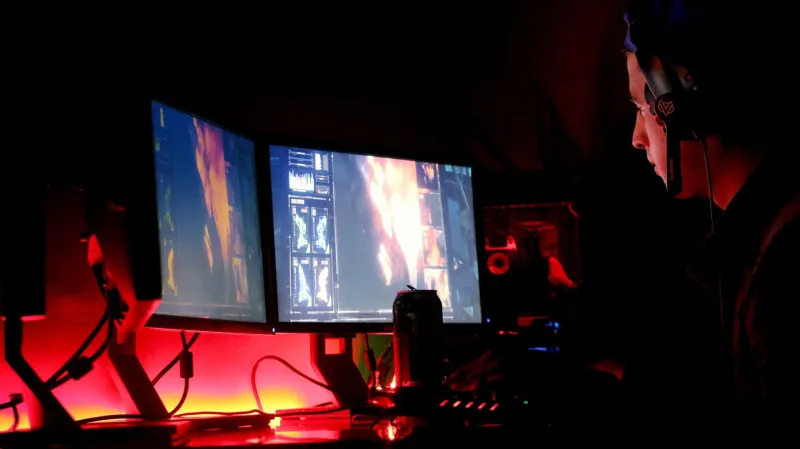
There's a specific kind of vertigo that hits when you wake up at noon, open your laptop, and stare at a project you finished six hours earlier. It works. You tested it. But somewhere between the third coffee and the commit at 4:17 AM, you made choices that felt obvious at the time — and now they look like they were made by a stranger with a thesaurus and questionable judgment.
Now imagine being the client. You didn't see any of it. You just got a link and a message that says "done, let me know what you think."
That gap — between how the build feels to you at sunrise and how it reads to a client with fresh eyes — is where most overnight handoffs fall apart. Here's how to close it.
Write the Rationale While You Still Remember It
Every overnight build accumulates decisions that don't explain themselves. Why is the checkout flow two steps instead of three? Why did you swap the client's beloved carousel for a static hero? Why is that one API call wrapped in a retry loop that seems paranoid?
At 2 AM, these choices are obvious. At 9 AM, they're mysteries.
The fix is embarrassingly simple: keep a running decision log while you work. Not a formal document — a plain text file or a Notion page where each entry is one line:
2:14 AM — Replaced slider with static image; mobile performance was 40+ on Lighthouse with the slider, 92 without3:30 AM — Added retry logic to payment webhook; Stripe sandbox was dropping requests intermittently
One line each. When the client asks "why isn't the testimonial section a carousel anymore?" you don't scramble — you paste the line and look like the most organized developer in America.
The bonus: writing these down forces you to sanity-check them. If you can't articulate why you did something in one sentence, that's a flag to revisit it before the client ever sees it.
The Morning-After Review: Read Your Own Code Like a Stranger
Before anything ships, do a pass where you pretend you've never seen the project. This is harder than it sounds when you're running on four hours of sleep, so make it mechanical:
- Run the full user journey on your phone. Not the emulator — the actual phone, ideally on cellular, standing in your kitchen. Overnight builds have a talent for hiding mobile-only breakage.
- Check every link and form. The contact form that emails nowhere. The footer link to a 404. These are the things clients find in the first ninety seconds.
- Read the UI copy out loud. 3 AM copy has a distinct voice. If any button says something like "Proceed With Submission," you'll hear it immediately.
- Look for the 4 AM special: hardcoded values, TODO comments,
console.logarchaeology, and that one test API key you meant to swap.
If you find something you can't fix before the handoff, don't hide it. Add it to the log with a note: "Known issue, fix scheduled for [date]." Clients forgive documented gaps. They don't forgive surprises.
Package It Like a Deliverable, Not a Link
A bare URL is not a handoff. A real handoff package for an overnight build should include:
- A one-page summary — what was built, what changed from the original scope, and what's next. Written for a non-technical reader.
- The decision log — cleaned up, dated, formatted. This is your paper trail and your credibility.
- Access details — staging URL, credentials (via a password manager link, never a plain-text email), hosting account, domain registrar info.
- A short Loom or screen recording — five minutes max, walking through the key features. Clients love this, and it saves you an hour-long walkthrough call you'd rather not take at 8 AM.
- Next steps with dates — even if the next step is just "your review by Friday, my revisions by Monday."
Explaining the 4 AM Reasoning Without Sounding Like You Made It Up
Sometimes a client pushes back on a decision and the honest answer is "it was 4 AM and it seemed right." You can't say that. But you usually don't need to — because the reasoning was sound even if the hour wasn't.
The move is to translate every overnight decision into daytime language: performance numbers, accessibility standards, security best practices, maintenance cost. "I simplified the navigation because deep menus convert poorly on mobile" lands better than "the mega-menu was fighting me at 3 AM," even if both are true.
And if a decision genuinely was fatigue-driven and you now disagree with it? Fix it before the handoff, quietly. Nobody needs to know. That's between you and your git history.
The Downloadable Checklist
We've put together a one-page handoff checklist you can run through before every overnight delivery:
- Full user journey tested on a real phone (cellular, not Wi-Fi)
- Every link, form, and button verified
- UI copy read aloud; 3 AM phrasing rewritten
- No test keys, TODOs, or console logs in production code
- Decision log written, dated, and cleaned up
- One-page summary drafted for non-technical readers
- Credentials shared via password manager
- Five-minute walkthrough video recorded
- Next steps and review dates scheduled
- Known issues documented with fix dates
Print it, pin it above your desk, and run it every time. The night build gets you the hours; the clean handoff gets you the referral.
Overnight work is a legitimate superpower — you ship while the client sleeps, and they wake up to progress. But the magic only counts if the work survives daylight. Build the handoff as carefully as you built the project, and your 2 AM decisions will read like strategy, not sleep deprivation.